- HOME
- Water Storage Basics
- How to Store Water
How to Store Water —
Containers & Myths
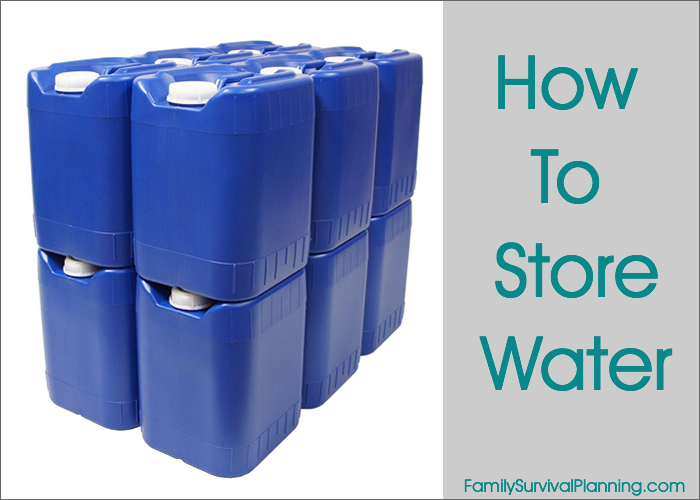 How to Store Water — Containers & Myths: There are many container sizes available, so there should be no excuses for not storing water.
Water storage is THE MOST important preparation we can make. Definitely food is important, but we need water to cook that food, water to drink, clean, and to grow our food.
Invest in emergency food storage now and enjoy peace of mind for the next 25 years. Don't miss out on the savings!
In some areas, water for outside use is not fit to drink. Ours comes from an irrigation source, and the inside tap water comes from a potable source.
So check the source of your outside water before filling big barrels for storage — unless you want to purify it before drinking.
Water Storage Container Sizes
Food grade, BPA-free, water storage containers come in such a variety of sizes that finding the size that works for your storage space should not be a problem.
There are many container sizes available, so there should be no excuses for not storing water. You can buy a 250 gallon container or you can stash 5 gallon (or smaller) containers in closets and under beds.
 2.5-Gallon Fold-A-Carrier Collapsible Water Container
 5-Gallon Water Container - Collapsible
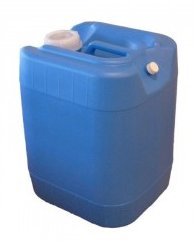 5-Gallon Water Container - Stackable
Collapsible containers that hold 2.5 and 5 gallons and are great for 72-hour kits and camping. The 5-gallon size that is stackable and, 3.5-gallon water bricks that can stack - well, as high as you dare.
 14-Gallon WaterBrick Storage Kit
 55-Gallon Water Barrel
 500-Gallon Water Tank
If you're REALLY serious about storing lots of water, there are containers such as the 15, 30, and 55-gallon barrels, 160, 250, 320, and 500 gallon tanks (pictured above).
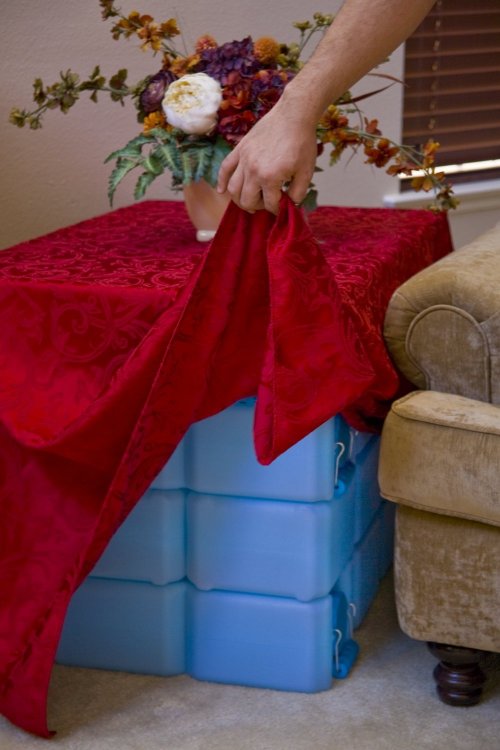
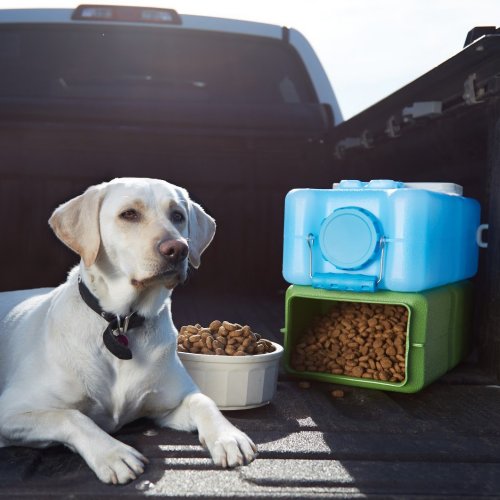
No Room to Store More Water?
Here are some creative suggestions: (as seen on Amazon)

Water Storage Myths:
MYTH #1 - Treat your water before storing it.
FACT - If regular tap water is used, there is no need to treat the water before storage. All culinary water is chlorinated, therefore, safe to fill containers right from the tap. (Qualification: I can only vouch for water in the U.S. - I am not familiar with water treatment in other countries.)
MYTH #2 - Water must be rotated every 6 months to a year.
FACT - Why? What a lot of trouble that is. Water is water is water. This doesn't mean you shouldn't purify the water if needed, but water doesn't "spoil" like food might. It is always water and can be purified by heating (see next myth), iodine drops, oxy-stabile drops, or by using some type of filtering device. If you can't purify it enough for drinking water, use it to flush toilets or water the garden.
MYTH #3 - Water must be boiled for 10 minutes to purify it.
FACT - Water only needs to be heated to ~160 degrees for 30 minutes or 185 degrees for only 3 minutes. This will kill all pathogens - even at high altitudes. (Keep in mind that heating water for a long period of time will use your fuel quickly and you may only have a limited supply of that. Consider using a solar oven for this purpose if you must heat water to purify it.)
MYTH #4 - Don’t reuse soda pop, juice bottles, or milk jugs for water storage. They leach chemicals.
FACT - The FDA requires that plastic used for juices or soda pop be food grade and therefore must be rated "PETE" or "PET". The theory is that a food grade plastic container rated "PETE/PET" is safer when exposed to heat. However, the breakdown of plastics or leaching of chemicals into foods only occurs under constant exposure to 80 degrees or more.
Milk jugs, on the other hand, are not suitable for long-term water storage use. Why? According to FEMA: "If you decide to re-use plastic storage containers, choose two-liter plastic soft drink bottles - not plastic jugs or cardboard containers that have had milk or juice in them. The reason is that milk protein or fruit sugars cannot be adequately removed from these containers and provide an environment for bacterial growth when water is stored in them."
Having said that, it’s perfectly safe to use other plastic containers which have a “PET or PETE” classification so long as they are not washed and used repeatedly. Use up the soda pop or juice, clean thoroughly, and then fill it with tap water. Store them in a cool place. Reusing liter and gallon juice and soda bottles is definitely better than having no water storage but check the rating/classification of the plastic.
More important information about water:
Where to Find an Emergency Water Supply
How to find an emergency water supply. How do you purify water for storage? Where am I going to store it? It takes up a lot of space and it's heavy. How much IS enough for my family? How much per day per person?
4 Best Ways to Purify Water From Any Source
It is becoming necessary to learn water purification methods for safe drinking water in most parts of the world — and maybe even right out of your tap.
Water Storage Basics
Learn where to find potable water in your home and in the wild, how to store it, and how to purify it to ensure your family has enough in a crisis situation.


What do you think?
I’d love to hear what you have to say in the comments.
What Other Visitors Have Said
Click below to see contributions from other visitors to this page...
Cat litter containers
I have several heavy duty plastic containers that had cat litter in them. I have water stored in them that I plan to use for flushing toilets and such. …
Reusing milk jugs
Would it be ok to reuse milk jugs for water to be used in bathing?
Joan-Admin
Yes, as long as you check them regularly as over time, the plastic …





 Valley Food Storage


As an Amazon Associate, Family Survival Planning earns a small commission from qualifying purchases.
FTC DISCLOSURE
If you make a purchase via a link on this site,
I may receive a small commission on the
transaction, at no added cost to you.
Copyright ©2007 - 2021 FamilySurvivalPlanning.com. All rights reserved.

