
- HOME
- Food Storage Guidelines
- Long Term Food Shelf Life
What Is the Shelf Life
of My Food Storage?
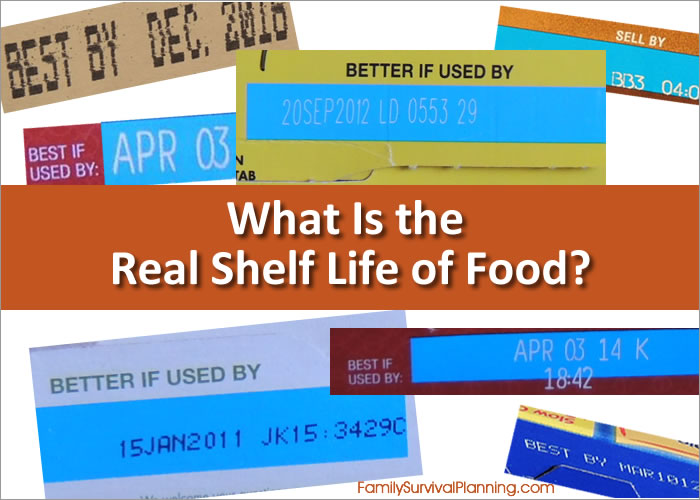
The question frequently asked is, "What is the shelf life of my food storage?" First, let's define "food storage" and "shelf life".
Invest in emergency food storage now and enjoy peace of mind for the next 25 years. Don't miss out on the savings!
Food storage generally refers to long term foods that are low in moisture and can be stored for a long time.
Shelf life is defined in two ways:
- "best if used by" - Length of time food retains most of its original taste and nutrition.
- "life sustaining" - Length of time foods can be stored and still be edible.
There can be a big time difference between these two types of food products. Foods bought at the grocery store can have a shelf life of a few days to several years, depending on the type of food, the storage conditions, and the packaging.(This date on foods from grocery stores is mainly for lawsuit protection for manufacturers insisted on by their lawyers.)
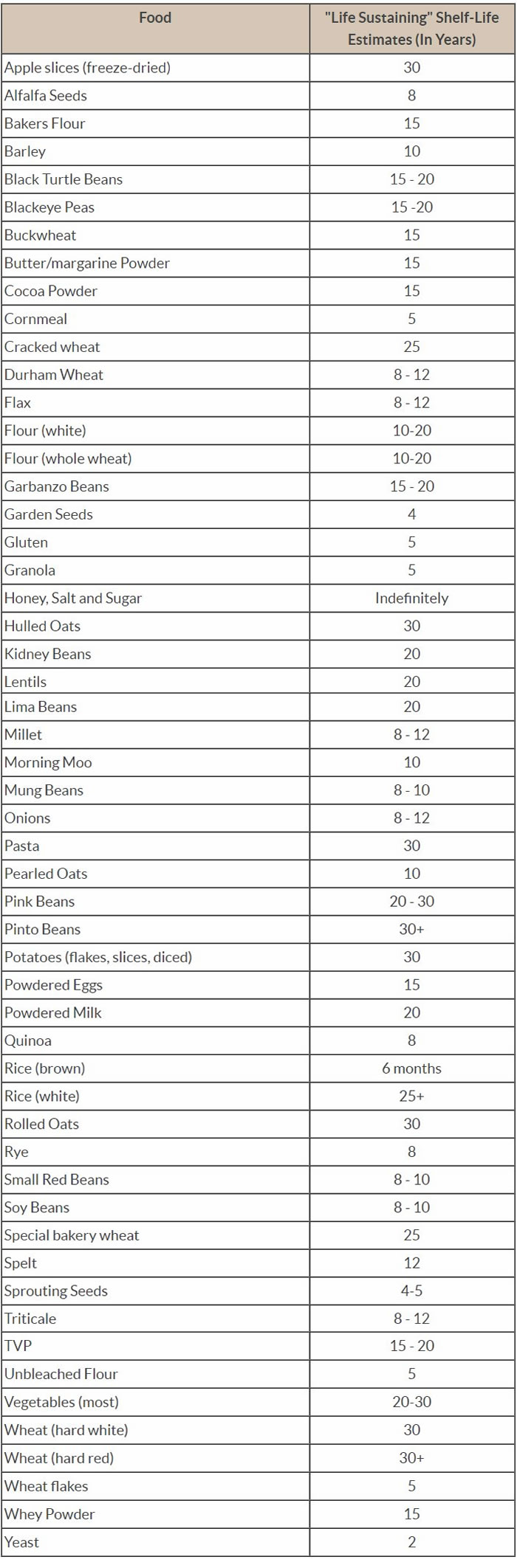
The "life sustaining" foods are those that are packaged specifically for long term storage. The estimated shelf life for many of these products has increased to 30 years or more (see chart below).
The longer food is stored, taste and nutritional quality declines, depending on the quality of the food when first packaged. However, studies have shown that freeze-dried and dehydrated foods, properly packaged and sealed, even if stored past their designated time, retain their calories, and calories will sustain life in an emergency and prevent starvation.
The longest shelf life of food storage depends on these 4 main criteria:
Let's take them one at a time.
Temperature
Foods stored at room temperature or cooler (75°F/24°C or lower) will be nutritious and edible much longer than previously thought according to findings of recent scientific studies. Foods stored at 50°F to 60°F (which is optimal) will last longer than foods stored at higher temperatures. Heat absolutely destroys food and its nutritional value. Proteins break down and some vitamins will be destroyed. Taste, color, and smell of some foods may also change.
Moisture
The reason long term food storage is dehydrated or freeze dried is to eliminate moisture. Too much moisture promotes an atmosphere where microorganisms can grow and chemical reaction in foods causing deterioration that ultimately can sicken us.
Oxygen
Too much oxygen can deteriorate foods and promote the growth of microorganisms, especially in fats, vitamins, and food colors. That is the reason to use oxygen absorbers when dry packing your own food products.
Light
Exposure to too much light can cause deterioration of foods. In particular if affects food colors, vitamin loss, fats and oils, and proteins. Keep long term food storage in low light areas for longest shelf life.
Fats & Oils

Fats and oils are a special case when addressing their shelf life. The problem with storing oils and fats long term is that they go rancid rather quickly. Rancid fats have been implicated in increased rates of heart disease, arteriosclerosis and are carcinogenic (cancer causing).
Because of the issue of fats and oils becoming rancid, many books and articles don't mention or don't want to give a specific shelf life for them. So I'm just going to say that they need more frequent rotation - at least every 1 to 2 years - if unopened. They will last a much shorter time if opened and kept at room temperature.
That said, coconut oil is what I store because will not become rancid, stores for years, has a low burn point (unlike butter), and is a healthy fat.
Freeze-Dried and Dehydrated Foods

Most freeze-dried and dehydrated foods have a shelf life of 25+ years. The freeze-dried process retains more of its nutrition and it tastes better than most dehydrated foods that are packaged as a full meal of, say, pasta, meat, vegetables, and a sauce.
If purchasing dehydrated foods such as pasta, rice and beans individually packaged, there is little difference. Because freeze-dried food is processed in an oxygen-free environment, there is no need for preservatives or additives.
Although dehydrated foods have a long shelf life, they usually require more water and a longer cooking time to prepare. Freeze-dried foods require very little water and just minutes of soaking (not cooking) to reach the ready-to-eat stage — very quick and easy.
I believe it's best to have some of both. Depending on the emergency, there may be certain circumstances when time is of the essence and a quick freeze-dried meal would be the best course of action. Other times, dehydrated foods are just as good.
Long Term Food Shelf Life Chart
(The years listed for shelf life assumes ideal storage conditions, i.e. low moisture, low light, cool temperatures, and low oxygen content.)
You might like these:
Freeze-Dried Food is 'Food Insurance'
Freeze dried food IS food insurance.Dispel the myths of freeze dried and dehydrated foods, compare brands, research nutrition.
Everything You Always Wanted to Know About Long Term Food Shelf Life
The shelf life of foods is a huge concern to anyone who is serious about long term food storage.
Shelf Life of Your 3-Month Pantry Storage
Food shelf life: The length of the shelf life of food depends on the type of food, packaging, storage temperature, and humidity.


What do you think?
I’d love to hear what you have to say in the comments.
What Other Visitors Have Said
Click below to see contributions from other visitors to this page...
ladytrucker
What's the difference in shelf life for morning moo and powdered milk. I'm certain my can of morning moo says longer than 10 years.
Joan - Admin: …
Question: Now we are opening our stored food, what now?
Great info. Ok, I properly stored dry foods and time has gone by. Now I am opening my food to eat. Where can I find tips or guidelines in determining …
Keeping Temperature of Food Storage Consistent
Hello, Thank you for this helpful chart! I assume "cool" refers to 50-60 degrees. Can you give any info on how long these foods last stored at 60-70 degrees? …
Kactus Kandy
Been storing for years. Thank You for the chart I just sent it to a friend who is just starting. Hopefully this will get her off to a good start.
Redneck
Thanks for the list!!!!! While I'm not a very heavy prepper I have recently started to stockpile some things just in case. You know the regular stuff …
Good article
Finally an article that gets straight to the information. Thanks
Link to Print ?
Good morning, Thank you for great information. Is there a link for print friendly page? Would like to print for future reference. Thanks!!
---------------- …





 Valley Food Storage


As an Amazon Associate, Family Survival Planning earns a small commission from qualifying purchases.
FTC DISCLOSURE
If you make a purchase via a link on this site,
I may receive a small commission on the
transaction, at no added cost to you.
Copyright ©2007 - 2021 FamilySurvivalPlanning.com. All rights reserved.
