
- HOME
- Food Storage Guidelines
- Small Spaces Storage Solutions
Creative Small-Space Solutions
for Your Food Storage
Not everyone has the space to store years' worth of food and survival supplies.
Next to the lack of money, adequate space with the correct temperature for food storage is the greatest challenge many of us face when we decide to begin our food storage.
Invest in emergency food storage now and enjoy peace of mind for the next 25 years. Don't miss out on the savings!
But it IS possible — even if you don't have the ideal storage space situation.
No matter how small your home or apartment, just get a little creative.
First thing to consider is temperature — the would-be killer of nutrition.
The Importance of Temperature
Since we are talking about longer term food storage and not just food you're planning on fixing tomorrow night for dinner, the temperature of your storage areas are the most important.
Heat destroys food. It's as simple as that.
With every 10 degrees above 50 or 60 degrees, the shelf life and nutritional value of foods will be reduced — no matter how it is packaged.
If you live in an area that has four seasons, or very high temperatures and humidity, long term food storage can be difficult. If you live in an area where homes do not have basements, food storage must be kept somewhere in your home with a constant temperature (around 70°F). Cement basements are ideal because they are below ground level (for the most part) and therefore, maintain a pretty constant 50-60°F, which is ideal for long term food storage.
Lacking a basement, just know that the higher the temperatures, the shorter the shelf life of stored foods. But don't let that stop you from getting prepared.
If you live in a hot and humid area:
For the best food storage conditions, a dehumidifier would be a good investment.
If you live in a hot and dry area:
Air conditioning is the most logical solution, but it takes electricity. Right? That's ok as long as we have electricity. In the days before electricity, people dug root cellars in order to store their garden produce, jerky, and grains in a cooler environment. Is that a possibility for you?
For a more information on the shelf life of foods, check out long term food shelf life or short term shelf life of foods.
Do you have a pantry?
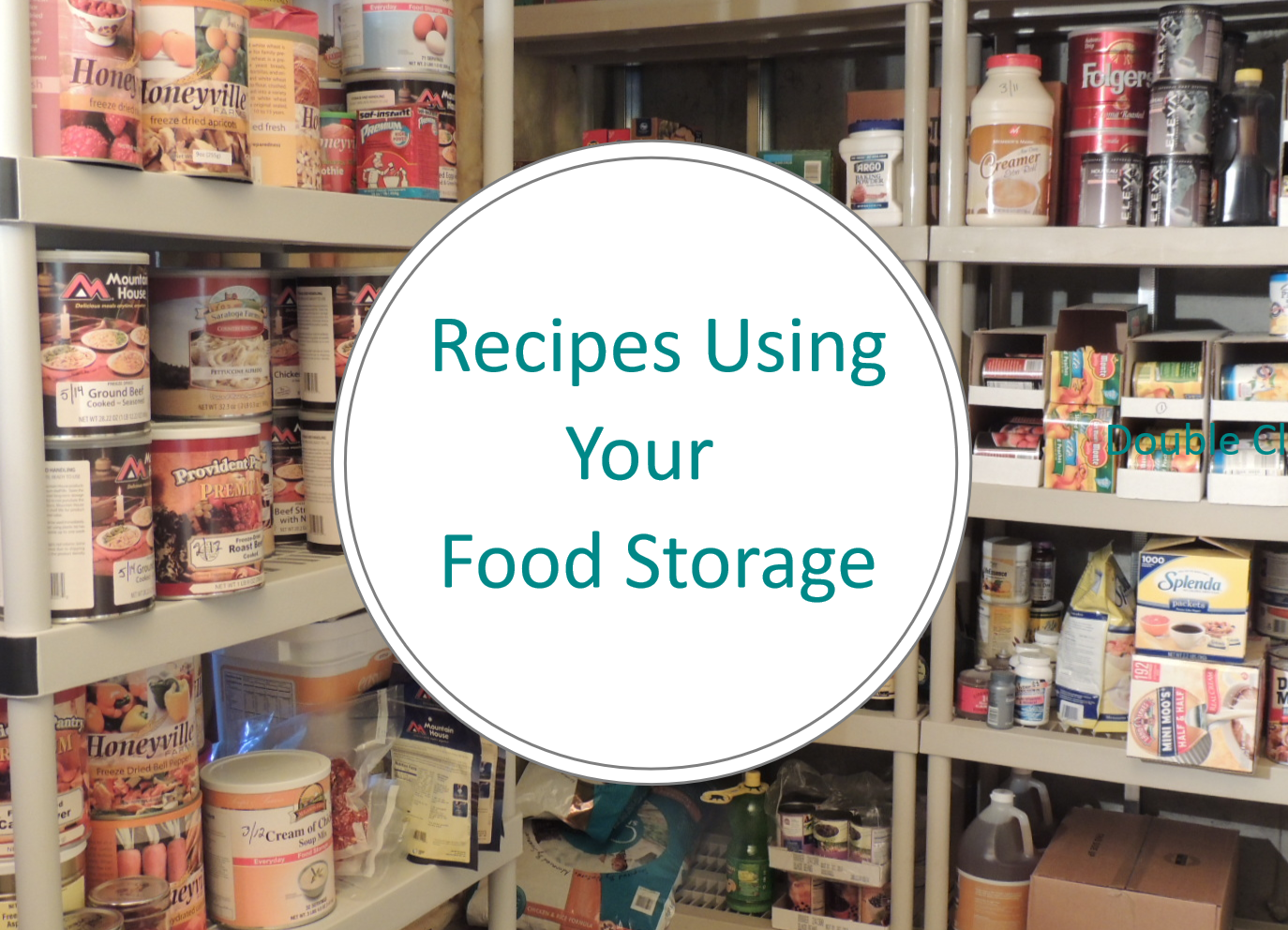 This setup may be everyone's dream for a food storage system, but you can find places that will work for you.
That's a start if you do. But your "pantry" may be a food storage system that is a combination of mini-pantries in several rooms, closets, and transformed nooks and crannies.
So your next step is to look around your home to discover how many different places can be turned into pantries or mini-pantries. Your mini-pantries may be in different places, but it makes sense to keep like items together.
Storage Areas to Consider
Let's take each area of your home or apartment and come up with some possible suggestions.

Cupboards
- Check for space above or cabinets
- Put shelving in deep cabinets
- Extra space above the stove or refrigerator
- Clean out or rearrange items
- Use turntables
- Add shelves under sink

Closets
- Build shelves
- Put shoes on top of boxes
- Hanging pockets on inside of doors
- Stack boxes or #10 cans at each end of closets.
Under Beds
- Use under-bed containers - some have wheels (Walmart or ?)
- Make your own food rotation boxes by cutting cardboard boxes to fit under beds - add new cans of food in one side and use from the other side of the bed.
Behind the Headboard
- Stack buckets of bulk foods behind the headboard, out of sight.
Night Stands
- Stack Boxes of Food, cover with a table cloth and use for night stands.
- Find used crates - decorate if desired and use for night stands

Closets
- Hall, guest room, bedroom, linen, broom, utility
- Rearrange
- Add shelves or step shelves
- Use crates or bookshelves
- Shelf racks on door backs
- Redesign the entire closet

Odd Spaces
- - Laundry room, above washer and dryer
- Between refrigerator and wall
- Under stairs
- Attic - non-food items only because of heat

Living Rooms
- Behind the couch - stack buckets or boxes
- Stack boxes or buckets, cover with decorative cloth and use for TV stand.
- Buckets or boxes can be covered and used for end tables

Outside House (non-food only if not temperature controlled)
- Garage, carport, sheds, covered porch
- Add insulated walls to create room with correct temperature
- Add shelves, floor to ceiling
- Add freestanding shelf units
- Build a loft
- Suspend shelves from ceiling
Keeping Track of Each Storage Area's Contents
The best and most manageable way to know what is in each of the areas you have designated for food storage is to tape a list of everything on the inside of a door, wall or shelf. And, if there are many different items in that space, write what's on each shelf.
Another idea is to keep a continuous record and inventory with some type of planner to help keep track of where, what, and how much food storage you have.
As you are planning the space for your food storage, remember to take into account the accessibility of each item. There are long-term storage items that can be left in place for years, but there will also be short-term items, which will need to be rotated more frequently. If it's a short-term storage item, make sure you can see it and get to it to rotate on a regular basis.
You might like these:
Dehydrated vs Freeze Dried Foods - Facts & Fiction
Let's explore the myths, nutritional value, costs, and serving sizes of freeze dried and dehydrated foods.
Long Term Food Storage
Long term food storage, bulk food storage is a good place to begin your emergency food storage plan.
Storing a Variety of Grains
Learn how to store a variety of grains to your long term storage.


What do you think?
I’d love to hear what you have to say in the comments.






 Valley Food Storage


As an Amazon Associate, Family Survival Planning earns a small commission from qualifying purchases.
FTC DISCLOSURE
If you make a purchase via a link on this site,
I may receive a small commission on the
transaction, at no added cost to you.
Copyright ©2007 - 2021 FamilySurvivalPlanning.com. All rights reserved.

