
- HOME
- Survival Gear
- Emergency Survival Kits
- First-aid Kit
Stock Your First Aid Kit
For Emergencies
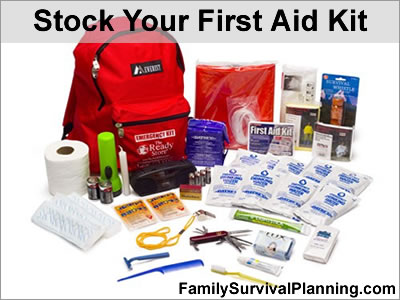
Does your first aid kit consist of whatever is in the bathroom cupboard? It shouldn't be left to chance.
That means not only gathering basic appropriate emergency supplies, but also learning the procedures for a few lifesaving techniques.
For example, every man, woman, and child should know how to do the Heimlich maneuver to save a choking victim. It takes about two minutes to learn and can literally be a lifesaver. Any member of your family or anyone at a table next to you in a restaurant could choke and die before help would arrive. Or you could perform the Heimlich maneuver and pop out the food in just a few seconds.
Invest in emergency food storage now and enjoy peace of mind for the next 25 years. Don't miss out on the savings!
The difference between life and death could be a couple of minutes of learning and preparing for emergency first aid.
Another procedure everyone in your family should know is CPR. If someone in your family sticks a knife in the toaster and is accidentally electrocuted or drowns in your swimming pool, it's too late to begin learning how to save their life.
This video shows the latest method of performing CPR. It's easy to do and may save the life of someone you love.
It's the same with basic first aid skills. If someone is bleeding, do you know how to stop it? Start learning the techniques of direct pressure, elevation, and pressure points now - not when the incident happens.
It's important to have supplies on hand BEFORE the need arises — and don't forget a First Aid Handbook.
If you choose to buy one, here is an excellent variety in all sizes and prices.
To get you started, this list includes common first aid kit supplies that should be in your kit. Add items you may need for your individual family.
Feel free to print the list below:
Standard First Aid Kit
Bandages
- Sterile gauze pads
- Rolled gauze
- Band-Aids of various sizes
- Triangular Bandage (36"x36"x52")
- Elastic Bandage
- Cotton Balls
- Cotton Swabs
- Sanitary Napkins (Pressure Dressing)
- Disposable Diapers (Dressing/Splint/Padding)
- Micropore Adhesive, Paper Tape
- Small Splints, Possible Sticks
- Heavy String
- Hot/cold compresses
Medications
- Pain Relievers
- Laxatives
- Throat lozenges
- Diarrhea Medicine
- Antiseptics such as soap, hydrogen peroxide, rubbing alcohol, triple antibiotic ointment, calamine lotion, or hydrocortisone cream, minor burn cream
- Antihistamine (such as Benadryl)
- Antacid (such as Rolaids or Tums)
- Activated charcoal (for poisoning)
- Eye drops
- Syrup of Ipecac
- Baking Soda (1/2 tsp. soda + 1 tsp. salt + 1 qt. water for shock)
- Other special medications like prescription drugs
Tools and Other Items
- Safety Pins
- Scissors
- Thermometer
- Matches
- Needles
- Tweezers
- Petroleum Jelly
- Salt
- Nail clippers
- Matches
- Medicine dropper and spoon
- Latex gloves
- Dust masks/industrial masks or gas masks
- Antiseptic towelettes
Special Individual Needs
- Baby/toddler needs
- Liquid pain reliever
- Teething ointment
- Diaper rash ointment
- Baby wipes with glycerin
- Oil/lotion
- Rubber syringe
- Current immunizations
- Compression socks or stocking
- Diabetic testing supplies
- Contact lens supplies
- Eyeglasses
Review all the items in your first aid kit every six months to make sure everything is in working order and fresh.


We can never learn enough about first aid and in an emergency it's nice to have a manual for instant look up of a particular procedure.
I don't know any better manual than this one by The American Red Cross. Purchase on Amazon for the best price.
First Aid Products You'll Need:
You might like these:
8 Steps to Building a Complete 72-Hour Emergency Kit
8 Steps to Building a Complete 72-Hour Emergency Kit for your vehicles, in the office, and at home.
Your Auto Emergency Kit Could Save Lives
Auto emergency kits could save lives in a crisis,or be a 'get home' bag in a grid-down situation.
Household Disaster Kits - Why We Should Have One
Store bulky items inside a large, portable, watertight, household disaster kit.


What do you think?
I’d love to hear what you have to say in the comments.





 Valley Food Storage



As an Amazon Associate, Family Survival Planning earns a small commission from qualifying purchases.
FTC DISCLOSURE
If you make a purchase via a link on this site,
I may receive a small commission on the
transaction, at no added cost to you.
Copyright ©2007 - 2021 FamilySurvivalPlanning.com. All rights reserved.
